



A small role-playing game may contain a peaceful village, a dangerous dungeon, an open field, and a boss arena that looks completely different from everything around it. Each area needs its own atmosphere, yet the soundtrack still has to convince players that all of these places belong to the same world.
That creates a difficult problem for indie teams. If every environment receives a completely independent musical direction, the final soundtrack can sound more like a playlist than a coherent game experience. An AI Music Agent can help translate written creative directions into music, but maintaining consistency begins with the developer defining the musical world before individual tracks are produced.
Build a Soundtrack Map First
Before creating music, list the major environments and gameplay states that actually need their own sound. A small fantasy game might include a main menu, home village, exploration area, dungeon, standard combat sequence, boss fight, and several important story scenes.
The next step is to describe what each location should make the player feel. “Village” is only a place, while “safe, familiar, warm, and slightly nostalgic” is already a useful musical direction. In the same way, “dungeon” becomes more meaningful when described as restrained tension, uncertainty, and a sense of limited space.
This turns the soundtrack from a list of filenames into a map of emotional functions. Developers can then see where tracks need contrast and where they should share similar qualities.
Establish the World's Musical Vocabulary
Once the soundtrack map exists, the team can choose several musical characteristics that remain relatively stable throughout the game. These may include instrumentation, harmonic character, percussion style, production texture, or the way melodies are normally handled.
A fantasy world might rely on plucked strings, wooden percussion, soft flutes, and restrained orchestral textures. The village can emphasize lighter instruments, while the dungeon reduces the melody and introduces darker harmony. Combat can increase percussion and speed without abandoning the same fundamental sound palette.
This approach works much like visual art direction. Game artists do not create every room with a completely unrelated palette and design language, because players need visual signals that connect different locations. Music benefits from the same kind of boundaries.
Let Locations Change the Emphasis
One common mistake is assigning a completely different genre to every location simply because each area looks different. The forest becomes Celtic folk, the capital suddenly turns electronic, the dungeon becomes horror ambience, and combat introduces heavy rock.
Radical contrast can work when it supports a deliberate artistic concept, but accidental genre switching often weakens the sense of a shared world. A more controlled approach is to change selected musical elements while preserving the project's core vocabulary.
Energy can rise or fall, arrangements can become denser or more minimal, percussion can increase during danger, and harmony can move from stable to uncertain. Individual locations still develop their own personalities, but the soundtrack does not reset its identity every time the player crosses a new boundary.
Create Families of Related Tracks
Game music often becomes easier to manage when developers think in families rather than isolated songs. Exploration can have several tracks that share an atmosphere but vary enough to avoid repetition, while combat may use standard, elite, and boss variations that increase intensity without completely changing musical language.
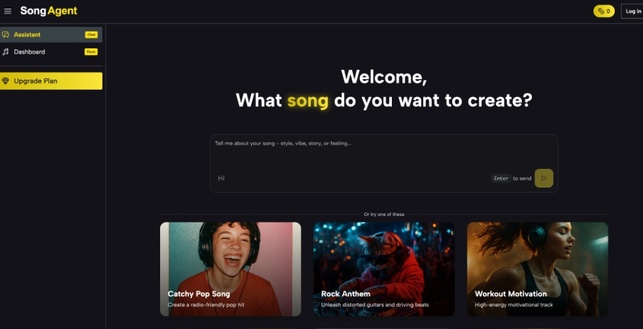
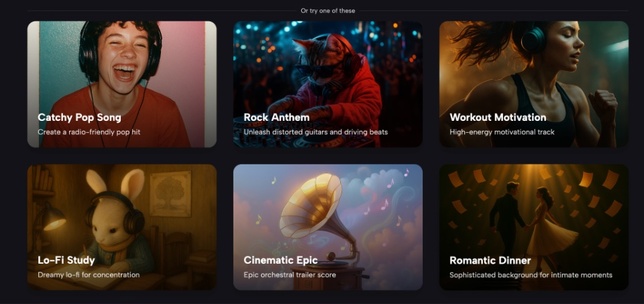
An AI Song Agent can support this kind of exploration by generating music from descriptions involving mood, style, structure, and other creative preferences. SongAgent also presents collection-style and batch creation as part of its broader approach, which can be useful when a project needs multiple related tracks rather than one standalone song.
For indie teams, the purpose is not to hand the entire soundtrack over to automation. The more practical use is testing several related directions around a clearly defined soundtrack brief and then selecting the options that genuinely fit the game's world.

Test Music Inside the Game
A soundtrack should never be judged only through headphones. Music that sounds impressive from beginning to end may become frustrating after looping beneath twenty minutes of exploration, while a dramatic opening section can feel repetitive every time the player re-enters the same location.
Developers should test tracks in the game as early as possible and pay attention to how they interact with dialogue, environmental sound, combat effects, and player movement. The arrangement should leave enough space for important audio cues, and transitions between exploration and combat should not feel abrupt or disconnected.
Looping deserves particular attention because players rarely experience game music exactly as a composer imagines it. An area may take three minutes for one player and thirty minutes for another, so tracks need enough structural flexibility to survive repeated playback without exposing an obvious restart every few minutes.
Use Musical Motifs Carefully
Recurring musical ideas can help connect different parts of the world without forcing every track to sound the same. A short motif associated with the main character might appear in the menu theme, return quietly during an emotional scene, and later appear in a more intense form during an important battle.
The motif does not need to be obvious every time. Constantly repeating the same melody can make the soundtrack feel smaller, while subtler connections give players a sense of familiarity without turning the music into predictable repetition.
For smaller projects, one or two recurring ideas are often enough. Their value comes from appearing at meaningful moments rather than being inserted into every location simply for consistency.
Let Important Moments Break the Rules
Consistency should not prevent contrast. Major story moments, bosses, or final areas often become more powerful when they introduce something the player has not heard before, such as heavier percussion, wider arrangements, or an unfamiliar instrument.
These exceptions work because the rest of the soundtrack has already established expectations. When the game spends several hours teaching the player what its world sounds like, breaking one musical rule can make a scene feel significant.
If the soundtrack never developed those rules in the first place, the same change simply feels random. Intentional contrast depends on having a recognizable baseline to contrast against.
Treat Music as Part of Worldbuilding
Indie teams often spend enormous effort building visual consistency while treating music as a set of tracks needed to fill empty spaces. That misses an opportunity because a soundtrack can communicate relationships between locations, characters, cultures, and events before the player consciously understands them.
Achieving that effect does not require every song to sound alike. It requires deliberate similarities and deliberate differences, supported by a clear understanding of what belongs inside the game's musical world.
Define that world first, establish its vocabulary, and then create individual tracks inside those boundaries. The result is not simply a better collection of songs; it is a soundtrack that helps the entire game feel like one connected place.